LiDAR SCANNING. ACCURACY THAT SAVES TIME.
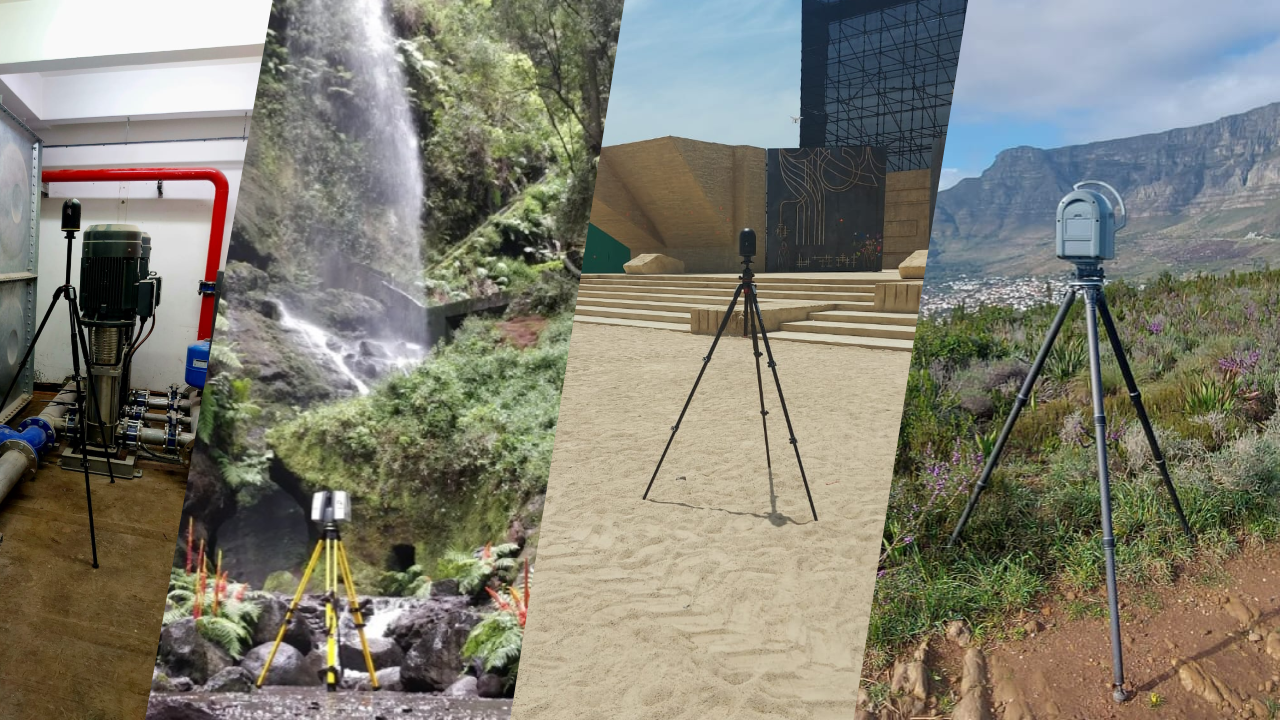
Fast scanning only matters if the data lines up cleanly in post. Lidar gives you hard geometry, but it’s the curation around that data that protects matchmove, layout, and every team that touches the shot later. Consistent targets, controlled error, and a human alignment pass prevent the subtle mismatches that turn into lost days.
What Lidar Actually Delivers
Lidar is more than a dense point cloud. It’s the truth layer beneath your entire CG build.
It provides:
High-confidence range data for sets, props, and stand-ins
True scale that anchors photogrammetry and on-set measurements
Stable references for layout, matchmove, look development, and continuity
The result: fewer surprises downstream, and a pipeline that behaves exactly as departments expect.
Where Human Curation Changes Everything
Great lidar isn’t just captured. It’s curated.
Select anchor surfaces that actually matter for the shot
Consolidate scanning around hero action and lensing—not just coverage
Avoid noisy zones like mirrors, glass, specular floors, and light foliage
Align to a production coordinate system that makes ingest painless
This is the difference between raw data and usable data.
Accuracy That Matters in Post
Different teams need different flavours of accuracy:
Layout & matchmove: reliable relative accuracy inside the shot
Art & build teams: solid absolute accuracy across departments
The real aim isn’t perfection—it’s predictable error. When the pipeline knows what it’s getting, everything works faster.
Capture Workflow
Plan the capture
Publish a simple one-pager defining the coordinate system
Walk blocking, mark hero zones, and map a practical scan path
Place coded targets or spheres that benefit both lidar and photogrammetry
Log lens data, camera heights, and tripod positions
Good planning saves more time than any scanner ever will.
Recommended accuracy targets
Full environments: 5–10 mm relative error in hero zones
Hero props/surfaces: 1–3 mm
Survey tie points: sub-pixel reprojection when aligned to plates
Enough precision to keep matchmove clean without turning capture into overkill.
Alignment & Registration
Begin with constrained registration using targets and tape measurements
Promote trustworthy surfaces and reject flexible/reflective ones
Run a global refine and lock a master alignment with versioned notes
Export a watertight base mesh plus a high-detail reference
A clean alignment is the single biggest predictor of how fast a shot solves.
Packaging for Production
Name sets and versions consistently: date → scene → unit → version
Include a README, coordinate system notes, and scale checks
Deliver both a lightweight proxy for layout and the full cloud/mesh for build
Teams ingest faster when nothing is ambiguous.
Error Control That Saves Real Time
Common issues & quick fixes
Reflective floors: capture cross-angles, mask reflections
Thin geometry: add oblique passes, confirm with a quick edge scan
Crowded sets: steal a quiet anchor pass
Mixed lighting: note lighting states, favour stable conditions for anchors
QA before you hand off
Alignment variance heatmap in hero zones
Reprojection error report against coded targets
A quick plate/mesh overlay
One short note listing compromises and their expected impact
Your future self—and every downstream artist—will thank you.
Curation Passes That Actually Matter
Remove redundant stations that add noise, not coverage
Trim crew returns, cables, and overscan clutter
Patch micro-holes in interaction surfaces
Verify scale on three non-collinear measurements in every hero zone
Most “bad scans” are actually “uncurated scans.”
Stage-Shoot Notes for Clean Data
On-set best practices
Agree on a five-minute scan window around lighting changes
Carry markers, spheres, and a neutral card
Photograph target placements and station positions
Log anything that changed since the tech scout
With talent or specialty assets
Lock timing and consent with ADs
Capture neutral and expression references under stage key
For props, tag hero vs background versions and scan both if they might swap
Consistency beats complexity every time.
Show These in Your Case Study
A before/after alignment in a hero zone
A simple error heatmap
A plate overlay showing proxy mesh alignment
A short timelapse of registration resolving, ending on the locked solution
People want to see accuracy, not just read about it.
Use-Case Guidance
VFX plates & set extensions
Prioritise stable planes intersecting hero action
Deliver ultra-light proxies for layout
Include plate-aligned cameras and tie points
Cast scanning
Use fast rigs when movement is minimal
Label neutral and expression references clearly
Deliver a clean, scaled base with topology notes
Hero props
Decide early on assembled vs disassembled scans
Use measured swatches to anchor roughness
Provide a clear version map so nothing breaks downstream
Bottom Line
You don’t need perfect scans—you need dependable ones that solve quickly and behave cleanly in the pipeline. Lidar delivers the backbone; human curation turns it into something production-ready.
If your next shoot needs a capture plan, send the dates and a short brief.
You’ll get back a target layout, a streamlined checklist, and a delivery template designed for fast ingestion.